Friday, September 01, 2006

The D Project - Shimmering Lights


It's a capital D that rhymes with V which stands for Vendetta. In other words, it's a rebellion against all that's average and illegitimate in the mainstream.

Newcomer Stephane Desbiens (vocal, acoustic and electric guitars, keyboards, and mellotron) is a shot of bright light on a very dim night. Just when you think there's nothing new and fresh, along with Frost* and GPS, he joins in on the fight. He also brings some elite talent into the incursion. Riding along on this raid is the likes of Tomas Bodin (The Flower Kings), Martin Orford (IQ), and Fred Schendel (Glass Hammer). You couldn't request a more influential band of leaders on the frontline. Assisting in the ancillary role is Mathieu Gosselin (bass, stick bass), Danny Robertson (Drums), Sandra Poulin (violin), and this secret entity named Alyssar (back vocals). Each one adds some impressive elements of their own. Then there is Francis Foy who produces and co-writes, and even incorporates some backing vocals. It goes to show you can accomplish a lot when you have a large circle of friends.

The only downside is that the production is a tad too grainy. Otherwise, it seems to work for all intents and purposes. The only recommendation I could make is for them to utilize a certain buddy of Bodin. That would be Jonas Reingold, who also happens to be a fellow Flower King's mate. He could fine-tune the mixing and mastering as well as fire up his bass. Reingold has repeatedly put out productions so clear you could hear a pin drop and let's not forget how well he channels his instrument. Then again, the cleanliness of these quarters isn't necessarily why you'd make the visit. Whether ancient or up-to-the-minute, The D Project gives you passage into an esteemed castle. With every threshold you cross, you're sure to find unparalleled pleasantries in the corners of these cuts.

Let's give the schematics a thorough inspection before anyone opts to surround this bastion of bliss:

"Shimmering Lights" - As Monty Python used to say, this is something completely different. You have no idea what you're getting into until you're a whole four minutes into the campaign. I wasn't sure if this was RIO, a warm-up, or an onslaught of instrumental bedazzlement. It's a lot like The Art of Noise with a famous quote from John F. Kennedy integrated into its bare middle. I really enjoy the music when the vocals pour in. Hopefully, my heads-up won't be seen as a spoiler. I found the beat to be eighties punk with dribbles of computer-looping and commercially-driven riffs. In the atmosphere is an air of Depeche Mode and New Order. It also has an edgy aroma of Echolyn and Izz. I even sort of hear Longshot's "The Cosmic Bacteria's Experiences" towards its end in some of the guitar and keyboard arrangements. I'm speaking out of turn as I have only heard this out-of-print masterpiece solely through a selection of hard-to-find samples. Regardless, it instantly makes me think of that genetically frenetic and fantastically fanatic fabrication... Now that's a mouthful!

"They Come And Grow" - This has the huff and puff of a dragon along with the dregs of Led Zeppelin. In addition, I hear The Tangent in their coldest impersonation of an era long passed. They seem to follow the path of a catchy Canterbury sequence. It's also easy to imagine the last letter in RPWL settled somewhere in the vicinity. It's as if Yogi Lang were floating within the viscous volume coddled inside this diaphanous vial.

"Hide From The Sun" - This is where Bodin first appears. I was really looking forward to seeing what he would do in this endeavor. His melodies are faint, but it's the moisture in the flakey brownie that provides the important aftertaste. Not to mention, it's the only place where Foy lends his voice, so you know it must be special. This song is a mix of Flower Kings, Riverside, Violent Femmes, and Herbie Hancock. It's really that odd of an incarnation, but still the chemicals blend well. It has just an ounce of lead in its paint and a hint of hardcore metal in its texture. As a secret ingredient, there is whispering that actually transcends into singing. For this reason, I found it to be very Phil Collins-esque at times.

"What Is Done Is Done (Rat)" - The title of this track makes no sense to me, yet it provides a fast-acting fix. Suffice to say, it's over before you know it. If you're keeping your eye on the clock, you'll miss it. Nevertheless, it offers a short reprieve from the rhythm. In this time out, you're allowed enough of a stretch to unwind and catch a gulp. Then again, it's belligerent and seems to purposely lack class. At times, it eats like a pig and act like, well, let's just say it'll make my mongrel happy. With that said, it has a touch of the female persuasion.

"End Of The Recess" - Orford is an artist who greatly undersells himself. Go no further than this song to find conclusive proof. His incantations are partly elfin magic and to some extent, enchanted moon dust. It certainly supports my supposition. He's a keyboard wizard and a true star. It's as if he hardly needs to import any effort in order to glimmer. This song spins in synch with Karmakanic's "Wheel Of Life."Again, I must wonder, "Where is Reingold?" If it's any consolation, it's unquestionable that this has a Swedish connection.

"September Solitudes" - I'm impartial to this piece. I really enjoy Bodin's subtle hand-outs. This piece has Porcupine Tree, Pineapple Thief, as well as a foggy mist of other translucent dreams in its midst.

"That's Life" - This is louder and rougher than the others, but I'll be darned if don't like it. Schendel puts some of his best progressions to the test. He plays Mini-Moog and Nord Electro keyboards through a “ring” modulator and a Leslie Simulator. You could say this complex arrangement is done on a one-of-a-kind device. When it comes to progressively pious pieces, this is the one that rules them all. It has oomph, as it seems to be a lighter variation of Time Requiem, Opus Atlantica, and Anderson's Space Odyssey. Oddly enough, it finishes in same manner as Transatlantic's first album. The fast wrap-up concludes the affair like a circus extravaganza.

In retrospect, the first couple minutes of the album are terse and tense. It was tough to settle in at the beginning. It doesn't grab hold of you immediately, but on subsequent listens, it fits as if it's that obscure piece you need to finish a puzzle. I found myself liking the music more as it went on. Each time I try again, it burrows incrementally deeper. While Frost* tricks us with an instrumental opener, it fools us in a totally different manner. You'll find yourself startled by the revelation, but not just by the fact it incorporates vocals. Like an underground coaster (see Mt. Olympus' Hades) it has unexpected passages and twists, which makes the ride awfully thrilling and a lot of fun.

Typically, the best song is the title track and it comes on at random. In the case, it's not only the opener, but it's also decent. However, I wouldn't call it my favorite. I'd have to say the two I liked the most both include maestro and ace Bodin. I felt these were the finest in the set. Regardless, I give this author credit for plagiarizing nobody and repeating nothing. In Desbiens' quest to make some newfangled fantasy, he finds victory in his debut. I'll be interested in seeing what triumphs lies ahead for this artist.

D is dubious; maybe even a wee bit deranged, but D stands for ditties that abound with creativity. In essence, D is for Delightful.

Monday, March 20, 2006

The Syn – Syndestructible


Like a Phoenix rising, The Syn comes out of nowhere and competes at full strength. For hockey fans, this might be debatable, but for progressive rock fans and even those of pro wrestling, this is a matter that’s stone cold serious. As if they found the fountain of youth, their reincarnation makes Rip Van Winkle look like a weary old man. While their odometer shows mileage, they play with vehemence and vigor. Yes might have all the accolades, but this obscure band comes alive from the ashes.

I was unaware of their connections, let alone their existence, until I saw them live. In other words, they were literally in my backyard before I was ever exposed to their music. When I learned that Squire was reforming an old band, I immediately queried their tour schedule. It was at this time, I found they were playing at a not-too-distant venue in the not-too-distant future. On a whim, I hit the road and at the spur-of-the-moment was in their presence front and center. Then, when I finally got around to spinning their disc, I was enlightened further. They were loud and clear on stage, but in the studio, they were every bit as good or better.

Without taking too much away from their outstanding performance, I must point out that the album is tight in its very own ways. It’s hard to say with all the good material out there. Even if it’s not in mine, this deserves to be at the apex of many people’s top ten list. Altogether, it’s as mighty as the Titanic, but the ship that sets sail in their sophomore outing is more or less unsinkable.

Here’s what surfaces in this incredibly vast, impressive, and virtually indestructible ocean liner called Syndestructible:

The vessel departs from the docks in “Breaking Down Walls” without much ado about anything. You’ll hardly notice the waves crashing down upon its sides. This is as blessed and divine as Sid’s Boy Choir from Spock’s Beard. It’s so swift and wispy; you’ll be light-headed from its sudden drop in pressure. Then, just like that, you’re onto the next track.

Before you know it, we’re drifting into open sea and the song, “Some Time, Some Way” is underway. This part embodies Bob Dylan’s nonchalant singing with instrumentals as melodic as The Flower Kings. Much to their chagrin, they’ve culled the concerns of a leak in the hull.

They return us to shore in “Reach Outro,” which in case you missed it, is a clever play on words. Listening to the song, you’ll come to realize the pun was purposely intended.

Each wedge in this multi-tiered introduction goes together like the moist and sticky slivers ensconced within a slab of Spumoni. The first works aptly as an intro while the third effectively abates into The Outer Limits of the outro. This intelligently aligned alliance could have easily been one track, one song, one vision. Nevertheless, the meaty middle is packed with high-quality jerky and that’s where you’ll find the most nourishment. Either way, the ends justify the means. There are no stodgy byproducts acting as filler. This is as crunchy and nutritious as an organic apple. The surgeon will not only stay away, but any sort of tampering is strictly forbidden. As a result, this progressive rock is extremely palatable and passed without pain. Some of the more pensive parts are Kaipa or Yes. Yet, the more folksy elements are inspired by Crosby, Stills, and Nash. With followers always begging for more, right upfront, they give their fans a treat they’re sure to devour.

Early on, you know this band is for real. Nonetheless, it keeps chugging along.

With Squire on the marquee, they could have easily sold tickets and merchandise with a handshake and a smile. Instead, they use their experience and skill to skipper another watertight cluster.

“Cathedral of Love” features some the most powerful passages you could find today in music. It’s obvious they didn’t just put their best food forward and then fall back on their haunches. It’s so sweet and sensitive, it tickles the spine. I hear a potent combination between two opposite, but equally important influences. That would be none other than Paul McCartney and The Flower Kings. Since its rhythms are distinct, delicate, and discrete, it sounds unusually good on headphones. It’s as if they took “Hey Jude” and “Go West Judah” and sent them across the Atlantic to “My New World.”

To coincide with this comparison, Squire’s bass in the breakout section reminds me of Jonas Reingold. You may feel it’s sacrilegious to make such an association. If it’s any consolation, I hold Jonas in the highest regard and feel he has already earned his place in the queue of those with legendary status. In my opinion, to compare the superstar to this young pup is a true complement to both the bassists.

And, you know what; it only gets better from here…

While it seems we are nearing the end, the previous song starts a chain reaction. The next couple events broach the borders of the epic perimeter.

“City of Dreams” has a modern flair, but it awakens the Yes’ classics in a roundabout way. The switch-ups, stops, change of direction, and digression, while all unexpected, are quite amazing. This incredible cut will open your eyes, ears, heart, and mouth. Try not to sing-along or play with invisible sticks in the air. While the dreamer’s dream, only those who are alert and conscious can experience the spirit and elation tucked deftly within its folds. In other words, pay attention while it’s playing. This song combines Tom Brislin’s creative keyboards with Toy Matinee’s elegant background arrangements. There’s a degree of Spock’s Beard urbane Thoughts applied, but this time, it reads mostly from Revelations. Using his own indomitable and identifiable style, Squire patently plays the bass as a lead instrument. It’s awesome how he walks these wonderfully wistful lines. To sum it up, this song is ingenious and stunning and an ace among a suite of highlights.

The next on the hit list is “Golden Age.” This maudlin marvel pays homage to their sixties heritage both lyrical and instrumentally. As much as we like the symphonic, too much could be overly predictable or mundane. They agree and take us on this influential tangent in time. In a way, it’s out of place, but these new digs will do. In the mix, I hear what sounds like a cow bell and a banjo. It’s more like Sheryl Crowe’s Tuesday Night Club than anything in the earlier proceedings. They lose their scepter, but gain a thrown. They carry on the tradition of Tom Petty and The Rolling Stones. This is the closest they get to the mainstream. By exiling to the safety of the empire, they have abandoned the stronghold, but their choice is so simple even a child could understand. By going commercial, they’ve expanded the crusade to meet a wider audience. Hopefully, the progressive brethren won’t send them to Valhalla. It’s so good, all should be forgiven. In celebration, bells ring and angels sing. Even a Buddha Boy is spotted shouting out with glee.

At this stage, they could have packed it in and ran off with the spoils. Instead, they indulge us with more priceless treasure.

In “The Promise,” the finest alloys are guaranteed to you. Back to the days of future passed, we encounter Pink Floyd, Moody Blues, and The Who. This is my kind of song, because it’s in no hurry to finish. On the other hand, it conveys the kind of insanity, clout, and fortitude one would frequently find in Izz and IQ. The quarterback drops back in the pocket and ends the amusement with a miracle of a Hail Mary pass. The music they use to draw the opposition offside is as devious as the theme from Clockwork Orange. Also, in this sequence, the drums and keyboards bestowed by the Stacey brothers shuffle similar to how Hans Lundin and Morgen Agren did on Kaipa’s Notes from the Past. After a successful album, it would be ambitious to one-up the success of their earlier submissions. Even so, they end with this large-scale and elaborate effort. As aforementioned in the abstract, each song has earned their place in the polls. What they accomplish in the last track is convincing enough to move them up in the rankings. You’ll be forsaken, dare I say a fool, if you sign out early and miss it. As promised, stand and deliver and take this blissful beating like a real fan (note the careful use of a gender-neutral noun).

They cover all the bases in terms of songwriting, melodies, execution, and singing. They provide ecstasy for our ears and even intrigue to our eyes. While they do not outfit the album with one of Roger Dean’s imaginative drawings, they still choose attractive artwork to encase it. Mark Brown is responsible for the graphics and shape in the design. His creation comes together in an interesting and abstract way. Within the liner notes, a very old photo of Squire and Nardelli is also to be found. While the music is exceptional, this silly snapshot alone is worth the price of admission.

The Syn proves they still have that subtle spark. After a rotation and a balance, they’re as good as new. Even if they’ve been around the block a few times, there is quite a bit of tread left on their tires. If you unwisely discount the deal, you may not know what you’re missing. Drive this off the lot today and just avoid the whole ordeal.

9/10

Monday, January 30, 2006

Saga - The Chapters (Live)


This has more episodes than Star Wars, Lord Of The Rings, and The Matrix combined. Truth be told, the story began in 1978 and it has spread throughout sixteen chapters over the course of eight studio albums. Aside from maybe a mix tape, this album marks the first time you can hear them all in order and in one single place. The bassist and co-conspirator, Jim Crichton, jokes that it's quite possibly the only album that took over twenty-eight years to complete. I haven't compiled the statistics required to confirm such a statement, but something tells me it just might be true.

The concept was inspired by two ideas: The Cold War and an odd article on the aftermath of Albert Einstein. Supposedly, the brain of this mathematical and philosophical genius sat on the shelf of pathologist Thomas S. Harvey. Whether the article holds any truth, and if it does, what the justifications may be, it makes for one truly intriguing premise. As I'm no expert on the band, all this explanation was found in the epilogue of the 36-page booklet that comes included. Without giving too much away, the notes give insight and hints into a twisted tale that ranges from alien abduction to the human flaw that directs our destructive tendencies. While aliens and astronauts are nothing new in Progressive Rock, it's still a unique notion and an atypical prime directive. It kind of reminds me of Henning Pauly's account on Douglas Adams (author of Hitchhiker's Guide To The Galaxy) in "Last Chance To See."

Michael Sadler is the vocalist who fronts this grand extravaganza. On this album, his attitude and intonations are ultra-impressive. When he's not on the road touring with this showy circus act, the ringleader can be seen making the rounds in and about various other circuits. He recently put out a solo album aptly christened Clear, which took his talents in an alternate, more commercial, direction. He's even collaborated with other creative forces such as the aforementioned Henning Pauly by providing crucial parts and useful participation in Chain's most recent production. While this could easily congest the schedule of a busy multi-tasking bumblebee, his efforts don't end there. Sadler's name is supposedly on the sign-up sheet for other future side-projects.

As for the others, Jim Gilmour plays the keyboards like John Beck of It Bites while Steve Negus' drums snap, crackle, and pop with the hydraulic reflexes of War's "Low Rider." Then there's Jim Crichton's bass, which ricochets in the same poignant manner as John Jowitt of IQ. Other times the gears shift as he injects the gas with the same raw power as Dave Meros of Spock's Beard. His brother and guitarist, Ian Crichton, draws from Queen's Brian May and in turn, quite possibly influenced Al Morse, who along with the other king of torts is another affiliate in the grossly successful firm of Spock's Beard. Interestingly enough, Saga's style overlaps in several areas with these tactful trial horses, especially when it comes to the quirky pop progeny they produce. Then again, they whack the mole with the same blunt and bulky edge as bands like Threshold, Dream Theater, Arena, and Enchant. Even so, it never really breaches the contours of metal, but brushes so close to the ledge, it frequently threatens to do so.

The more I listen to the album, the more it becomes apparent their registry lists a group of products that are unusually varied. We get fantastically flamboyant solos on both the keyboards and the guitars, randomly rebounding into dark shadows and arriving inbound out of nowhere. Ian's outcries, in particular, are sweet lucidity when it comes to the unaccompanied escapades he goes on during "Images" (Chapter 1), "Will It Be You?" (Chapter 4), and "Ashes To Ashes" (Chapter 12). It's as if the ostentatious ace from Queen is making an unannounced appearance. In addition, there are many times when a duo or trio of instruments square off in a duel. For example, in the closing quivers of the album, that would be "World's Apart" (Chapter 16), Ian and Jimmy G do a synchronized dance. This fiercely spirited sombo prompts thoughts of an aggravated assault by Al Morse and Ryo Okumoto.

It's amazing that this was linked between separate releases as some of the transitions between the songs are quite seamless. The space that separates "Images" (Chapter 1) from "Don't Be Late" (Chapter 2) is so microscopic it's undetectable to the untrained ear. Afterwards, they don't rest as they do the same into the next song, "It's Time" (Chapter 3). Keeping pace, they don't substitute the picante sauce for a salsa that's mass-produced or manufactured in New York City. Instead, they incorporate an out-of-this-world theme that would actually suit Ralph Hinkley for the role of Greatest American Hero. Likewise, the third track fits snuggly within the catacombs of Styx. From each pioneering piece into the next fruitful frontier, they continue the rush with one golden nugget after another.

We are privileged to partake in a mixed bag of prestigious pieces. None have folds of fat or sport a portly potbelly, but most, if not all, are pickled in salty brine and slathered with pretension. "No Regrets" (Chapter 5) and "Not This Way" (Chapter 10) are classical, madrigal, and balladic in nature. This is proof they aren't fixated on a stringent structure nor do they feel compelled to stick compulsively to a certain design. In the first, I hear a soprano sax that captures the characteristics of Kenny G. Since no such instrument is mentioned in the credits, it's either the result of special effects on the guitar or careful calibration on the keyboards. These poised and polished passages are jewels in an ornate arrangement, hearkening back to the elegant armlets worn by Queen for their Night At Tthe Opera.

On the opposite end of the scale, "Tired World" (Chapter 6) and "Too Much To Lose" (Chapter 7) are less reserved and reticent, bordering on the whimsical and wacky. The former is lubed with a groovy section on bass that's so fluid it's greasy. The keyboards, conversely, are a rainbow of sprinkles that resemble the gaudy intro to Spock's Beard's "Go The Way The Way You Go". The other instruments, however, chug along with the crazy locomotion of a steam engine. Then there's the following chapter, which adorns a symphonic stamp that instantly traces back to their conventional stash.

The most impressive and ambitious aspect of this concept is the storyline. It was meant to be seen with an analytical eye and epic acuity. Yet, when breaking it down into its individual installments, you are left with more than a few exceptional song-oriented stand-outs. My favorite "Ashes To Ashes" (Chapter 11) comes in the second half of these extraterrestrial archives. I really like how the steamy keyboards sizzle and then evaporate from the surface. Lost in space, they scream for rescue with the high-pitch shrill of a siren. It's a distress call that is sure to cause a ticklish sensation. Rewinding the ribbon, "Will It Be You" (Chapter 4) proves to be a highlight early on. In its many breakout sections, it provides flash floods and flares as it flickers on and off with a strobe light of sparklers and streamers. With each bridge is crosses, it's like Flash Gordon exploring Planet Mongo, while in his quest, encountering many weird and outlandish scenarios. They flaunt their abilities, strut their stuff, and function in a form so fit it would draw the attention of Charles Darwin. Their exploits are so imperious in this piece; they're meant solely for the princes of the universe and nobody else.

It seems they not only deliberated to great length on the melody and the lyrics, but also considered the chronology of the pieces. Each one lines up side-by-side like jagged fragments flung from a jigsaw. Many themes are reprised, which is remarkable when you consider how these songs have spanned the generations (for the record, none of them were on Generation 13). The instrumental oboe section in "Images" (Chapter 1) shows up in the vocal verses of "World's Apart" (Chapter 16). Before the repeated section becomes stagnant, it trickles into a nebulous interlude on the piano. Also, "Don't Be Late" (Chapter 2) and "Remember When?" (Chapter 9) parallel each other when pampering themselves with the powder and putting on the make-up to the chorus. Plus, to put a spin on the singing, when Michael breaks away from leading the steering committee, Jim Gilmour provides his grizzly voice. In "Don't Be Late" (Chapter 2) and No Stranger (Chapter 8), he drowns these ditties in buckets of weighty words thus pouring on the extra gravy and giving the music much added gravity.

While "You Know I Know" (Chapter 12), "Uncle Albert's Eyes" (Chapter 13), "Streets Of Gold" (Chapter 14), and "We'll Meet Again" (Chapter 15) have yet to be mentioned, these gelatinous gems are so salacious; they squirt with an abundance of sugar-coated sap. Liquid spurts and spews from the fountain in jet streams of mouth-watering fluid. It's the same response one usually gets when biting down on one of those juicy candy wax conduits.

They've put a lot of verve into these classic cuts. They keep the energy flowing as they warp through hyperspace, taking us from "Images" to "World's Apart". The great space coaster takes us far, covering a distance that spans two discs. I may have jumped around in my analysis, but it's important to point out that the puzzle pieces were never presented in any particular order. There wasn't really any rhyme or reason to how they were released. However, they each stand on their own and provide the factors needed to fill in the fuzzy logic. Once you understand the concept, all the graphics they've used over the years will come quickly into focus. While it will become immediately evident that those insect-like beings are from outer space, you will be made aware they're not annoying pests or unwelcome invaders. As a whole, this live performance reads like a novel as we take this cutting-edge craft from one chapter to the next. It might be one small step for music, but it's a giant leap for a band.

8.5/10

Monday, January 23, 2006

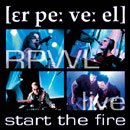
RPWL – Start the Fire (Live)


When it comes to the world of live music, RPWL is awe-inspiring. I saw them perform live at ROSfest 2004, which happened to be the first annual outing of this truly fetching and absolutely astounding festival. They headlined the event and, boy, were they ever impressive. The honor couldn’t have been bestowed upon a better choice. They had so much presence on stage it was uncanny. They pinned down every piece in the set list as if they were shooting tacks from a nail gun. On this particular album, they make use of their best recordings from the WORLD THROUGH MY EYES-TOUR 2005, so you know it has to be good. They represent every era in their discography, have great cover selections, and even bring one extraordinary guest onstage.

For starters, the special guest is none other than the veritably versatile Ray Wilson. It doesn’t take long for him to the board the bandwagon. He joins the crew halfway through the first disc (by the way, this is a double CD). When he comes out, the vibe radically changes. With the auxiliary motors engaged, the already alluring mood is supplanted by an abrupt outburst of energy. Afterwards, he sticks around for another enticing number. To give you a little background, his assistance was solicited for the World Through My Eyes album. It turns out Yogi Lang (the L in RPWL) wrote a song called “Roses”, which he thought was ideally suited for Ray’s voice. Through a series of fortunate events, Yogi got in contact with Ray who willingly came into the studio. They got him to join them in concert too and here you get a chance to hear the song how it was originally intended to be sung. If that’s not enough, they get him to follow it up with a tune from his own personal cache. The selection they choose is “Not About Us”, which in addition to Ray, was co-authored by legends Rutherford and Banks for the Calling All Stations album. With this pair of superb submissions, Ray’s appearance in this production is the pudding in their symphonically-syrupy power pop.

In this concert, they did little to hide the fact that they started as a Pink Floyd tribute band. They cover three of their infamous songs in succession. They provide “Opel” as well as one of my favorites, “Welcome to the Machine”. Placed upon the pile, they also perform the quirky cut “Cymbaline”. They have the goods to distribute the parcels from Pink Floyd’s sweatshop, but like Kevin James, they add their own distinct personality to the delivery. At times it is difficult to distinguish between these covers and the creations they’ve accumulated for their own private collection. What’s interesting is that “Opel” is on their Stock album while “Welcome to the Machine” has seemingly become a concert staple. This is my first time hearing “Cymbaline” spring forth from the band. Nevertheless, it too should become a common conveyance in the tour circuit as it has the most endearing acumen. At this point, it is hard to say whether or not the originals are better, because they are able to emulate them with such intimate precision. Yet, in more ways than one, they’ve made each song their own.

Besides what’s been mentioned, there’s plenty else to entertain us. Starting with “Sleep”, it becomes tentative and loose after freeing itself from ice-cold inertia. Once it thaws, it’s immediately apparent this slick fish was effectively fresh-frozen. It shakes the frost from its scales and bites down with the tenacity and teeth of a piranha. “Day on My Pillow” is so radio-friendly; you’d think they were covering a song from The Beatles. For those who don’t already know, this really is an RPWL original. Also, what’s clever about this song is that they stealthily squeeze in “I Know What I Like (In Your Wardrobe)” from Genesis’ Selling England by the Pound. It slipped through my fingers many times before I finally grabbed hold and reeled it in.

I like all these songs, mostly the covers and especially the ones with Ray, but it’s the songs that hearken back to the debut that feed the fire best. Among them we get the critically-acclaimed favorites “Who Do You Think We Are” and “Crazy Lane”. They feverishly nourish the flames as if they were kindling. We also get the tried and true title tracks from other essential albums. That would be “Trying to Kiss the Sun” and “World Through My Eyes”. By now, I’ve accounted for a major fraction of the album and while there’s more, this is already enough to fill the foggy air with luminance. The remaining selections such as “Start the Fire”, “The Gentle Art of Swimming”, “Wasted Land” and “I Don’t Know” are glowing bulbs that have evidently been enhanced. You’ll find extended versions of many of their songs. There are breakout sections that introduce whole minutes of sheer instrumental madness. Mostly, Markus Jehle’s keyboards are responsible for this added depth, but everyone finds a spot to provide some kind of innovation. With embellishments that would warrant envy, these songs have exponentially improved over time. For that reason, even Anne Robinson would have a difficult time deciding upon the album’s missing link.

All that aside, my favorite track overall is probably “Hole in the Sky” and it’s the one that appears to end the album. While they may start in a haze, they finish in a cloud filled with static electricity. As this is the first and best song off their debut, this is the song that put the band instantly on my short list. It’s this song that I feel is also this album’s biggest attraction. After cheers and jeers from the crowd trailed by a convincing pause, it seems it’s finally over, but this is not the case. They find the space for an extension and work in a nifty encore. For our added pleasure, they ambush us with an unreleased studio track called “Stars are Born”. It’s long and it’s certainly studio quality. This well-constructed cut sounds similar to the supergroup Kino, which is why it’s an excellent way to complete the album.

Between the set list, the covers selections, and one very special guest, this is one amazing product. It’s really one of the best live albums I’ve heard to date. After earning accolades from their debut, entertaining fans with three fantastic follow-ups, and headlining one of progressive rock’s most foremost festivals, the band continues to keep the momentum going. While they’ve done enough to earn entry into the hall of fame early, they continue to keep their edge razor-sharp. In a time when bands are slapping together albums and releasing half-hearted efforts, especially on the live front, it’s refreshing to hear such great “live” material. I may actually give this one more attention than their studio releases, because it’s so energetic, refined, and balanced. Each side from dawn to dusk flows with seamless integrity while the opening and closing notes land with careful placement and clout. They didn’t start the fire; it was always burning since the world was turning. However, they take this opportunity to grab the majority of shares. Using their investments wisely, they supply the stockades with striking live licks and sentient technology. With this concert, they’ve tried their best and haven’t failed their fans trying. Then again, that’s just my opinion of how I heard their world tour through my ears.

8.75/10

Monday, January 16, 2006

Moon Safari - A Doorway to Summer


If The Beatles were to go the progressive route, this is where they would have gone.

This band shares great harmonies in the vein of those famous four tenors from Liverpool. It would be hard enough to mimic John, Paul, George, and Ringo, but they set their sights even higher. Adding to the roster of their role models, they follow in the footsteps of their Swedish ancestors and sole parental guardian. As a result, much of the instrumental aspects of their music capture the fiber and fortitude of Tomas, Jonas, and Roine from The Flower Kings. To draw from one of these bands is brilliant, but to take from both is beyond compare.

Over and above inducing the innovations of Tomas Bodin, they also make use of the man himself. He contributes to this band in many ways, but it could hardly be considered a monopoly. He’s mixed, mastered, engineered, and produced the album as well as incorporated an incredibly stylish solo. It’s so trendy; it’s as sharp as a tack. However, he’s drawn a line and set a limit, leaving a lot of room for the others to flourish. On top of Tomas manipulating the gears with divine intervention, Simon Akesson provokes the organs, piano, moogs, and mellotrons with instrumental instigation. Then there’s the bass, which is intimately similar to Jonas Reingold, but alas it’s not him. It’s another fresh face that goes by the name of Johan Westerlund. As green as this guy is supposed to be, his talents are quite profitable and gainful. He adorns the instrument with the same commitment as the progressive prince and maybe even the almighty Chris Squire. Yet, he personalizes these tricky licks with his own new-fangled novelties and petulantly youthful fervor. The talent in these rookies is enough to blow the roof sky high, but it doesn’t stop there. Anthon Johansson guitars are so agile and spry they slice through the wind like a lissome Learjet. While he navigates well with an electric, his piloting is precise when plotting a course on the acoustic. Petter Sandstrom’s incorporates some essential elements on the harmonica, but his primary function deals with the deliverance of the singing. Simon also sings lead in a few places. Peripheral to these two voices, Johan and Anthon supply their own backing vocals, which cohesively coalesce within the colors of a prism. When they stand united and focus their signal, they create a spectrum of sound that rivals the resplendent rays of a rainbow. Tobias Lundgren is the only one whose lips are sealed, but that’s quite okay. He’s much too busy sanctioning all the necessary provisions on drums and percussion. While they already have enough executives in upper management, additional advisors are brought onboard. A person by the name of ‘P’ plays the Steel Guitar whereas Simon Lundin imparts his own percussive affirmations upon the delegation. Even though their meetings are strictly compulsory and altogether brief, these consultants provide creditable council, contributions, and subsidization.

Not only is the music universally accessible, nipping at the buds of many mainstream bands, it pinches at the nerves of numerous niche acts too. There is no doubt in my mind that it’ll run the table with Progressive Rock fans, especially fans of The Flower Kings. In many places, their style is nearly indistinguishable from the longstanding legends as well as the current Global Elite. I’ve never seen a band capture the entrepreneurship of the Rockefeller’s of Prog Rock and still have their own unique take on the music without going so far as stealing. As daunting or difficult as this might seem, they successfully accomplish this intimidating task and they do so much without even flinching. They may not be the tycoons of today or the Robber Barons of tomorrow, but they’re wallowing in a wealth of ability. It’s obvious this band is poking at the rocking residues of the past and the progressive prospects of the future. Once the embers are good and glowing, they daringly pass the rake over these red-hot coals and grill up the most exquisite music for the modern day. It’s palpable they’ll someday overthrow the House of Rothschild, but for now, they’ve at least become a part of the progressively promising nouveau riche.

Unlock the latch and hop into the hatch then brace yourself for the brave new world of adventure that exists on the other side of this solar-powered portal:

Doorway – Right away, we confront an ambiance you rarely encounter in the opening of a debut. From the get go, they are in complete command of the controls and you know you've discovered something special. These fine young chaps share many virtues with the founding forefathers of music. They base their compositions on a reputable constitution, but introduce their own artistically imaginative amendments. The harmonica passage, in particular, is an excellent addendum to an already inclusive script. It reminds me of the score I heard in a childhood movie called Lion’s for Breakfast. It’s about uncommon to find this kind of passage in rock as it is to find this extremely rare video. This alone should be enough of a reason to declare their independence. Then again, it’s obvious they were bent and shaped by Tomas Bodin’s skillful blacksmithing. It’s apparent why he has chosen these artists to intern in his apprenticeship. Like Evander Holyfield, they come up through the ranks and go on to prove they are the real deal. Unlike other up-and-comers, nothing is rushed in their development or hastened in their training. They have only entered into this release when it was good and ready and this song happens to be the most predominant prize in the trophy case. It’s long, but not the longest. It sufficiently accomplishes everything they’ve set out to do and right away, establishes their superior standing. What sets them aside in the realm of progressive rock is that they are not only adroit on their instruments, but they sing very well indeed. This is a science fair of harmonically-tuned functions and filters. Then again, it’s far from formulaic and nowhere near paint-by-numbers. Aside from hearing The Flower Kings and The Beatles, I perceive the earthy undertones of Echolyn tip-toeing through the tread of this mix. They may very well be the next progressive phenom and as a fan, you’ll be privileged to hear such uninhibited music. It’s good to know our liberties and freedoms include the right to pursue these kinds of progressive masterpieces. This will catch on as the consensus will hopefully show, but give it time; you’ve got to let it grow.

Dance Across the Ocean – This song shares a kindred spirit with Karmakanic’s second album. It’s easy to imagine it snuggling between a warm and cozy blanket with Wheel of Life. It surfs the cosmic collective of “At the Speed of Light” and “Where the Earth Meets the Sky”. In its travels, it encounters Gentle Giant and Spock’s Beard vocals. Like that mirror imprisoning General Zod, Ursa, and Non, this floats through space and rotates on its axis. As long as we’re talking DC Comics, the more balladic parts take you back to Seal’s “Kiss of a Rose” from Batman Forever. IQ’s “Born Brilliant” from Dark Matter is also buried somewhere below the sheets. It’s fresh and airy, so there’s little risk the bugs in this bed actually bite. Simon shows breadth and depth as he adjoins ELP to the sprawling district. When he’s not Emerson, he’s Wakeman in a roundabout way. To further support their cause, they endorse The Proclaimer’s “I’m Gonna Be”. Ironically, if this was a world without music, I would walk five hundred miles just to hear this song (though maybe not all at once).

A Sun of Your Own – What I find most intriguing is how quickly you can learn the lyrics to this one. It’s insightful and expressive. This is how verses were meant to be written. The rabbit ears are accurately angled, making for a clear and cloudless connection. Consequently, it strikes all the right chords. We get wily wordplay and a benevolent melody. The two come together like milk and cookies or for those international types, tea and honey. Speaking of harmony, this is the textbook definition of how to bundle layers of voices together. The end effect is serene, sympathetic, and sincere. You may think they’ve forgotten the main theme, but they’ve snuck that in too in a very covert way. There is a thoughtful passage that reminds me of Terms of Endearment. Again, there are ingredients from Echolyn’s, this time it’s “Mei”. I also found parts of the song coincided with the conclusion to Neal Morse’s “?”. As long as they’re borrowing from the masters, Anthon tries his hand at a guitar solo, which embodies the orderly edifice of a Steve Hackett structure. This cut is immaculately conceived, creating an ideal bond with each of its devoted disciples. Immediately you’ll hit it off with this track. The sun will not only come out tomorrow, but the skies are so blue, this astral dog has been out all day.

We Spin the World – While three’s a charm, the fourth track is the keepsake. It takes fifties rock n’ roll and couples it with seventies progressive rock. There’s the tiniest trace of disco and it even has a little eighties pop. It drives down the drag like a hotrod and then rolls into the downtown quarters of American Graffiti. After parading its custom paint job, Grease Lightning pulls into the parking lot of Al’s Diner. Aside from rock and pop, this takes us through many roads and channels that range from classical, symphonic, Broadway, and folk. It transitions in the most translucent way, never losing the listener. With fingers crossed, we can only pray the hooligans of Rydell High won’t turn this majestic moon into a sordid sun. It encounters a chorus that represents the populace of “We are the World” and even tunes into WKRP in Cincinnati. I hear “Suite Charlotte Pike” as well as various parts of Transatlantic’s other epic numbers. Overall, The Flower Kings rule the roost, but there are loads of instrumentals that I found to be new and exciting. This has athletic prowess and it’s very ambitious, but it contains two paltry imperfections. First, there is a minor mispronunciation. They make “jokes” to the crowd and miss, but it’s not like their routine leaves them with tomatoes in their pockets or egg on their face. Second, on the initial impression, it feels as if it’s tad too long. Where it seems it should end, there is a passage that’s meant to act as an intermission. These empty calories create a cavity, but it works to carve the incisor into two distinct halves. It aims for Kevin Gilbert’s “There Was a Little Boy” and comes relatively close to the target. I misjudged this the first time as the finale truly requires a hush before the hailstorm. It’s done quite well, but needs numerous treatments to fully take in. That's why this has the most potential as a grower. The most romantic parts remind me of Love American Style while the most prosaic moments are fiendishly familiar to Nightmare on Elm Street. It spins on its head like Linda Blair, but jumps like a gyroscope to each of its sections. With all these strange traits, it even manages to assimilate a goofy sector that’s oddly similar to the Get Smart theme. Fortunate for the secret agent man, the technology is overhauled with many intelligent upgrades. While he no longer has his telephone hidden in his shoe, this silly installment shows the ingenuity of these gadget guys. In the end, the writers of this episode find their bearings and wind it down with the kind of musical that would make Drew Carey blush. On the whole, this song is stretched to its max. Then again, progressive patrons have to show some patience sometime. After the sappy segue, it finishes happy and strong. It’s always dreamy and never mundane. After witnessing this intense and impassioned contest, it’s apparent this crew can hang with The Flower Kings. It might be a friendly rivalry, but it undoubtedly demonstrates how much they deserve to play in the professional league. Not to mention, its harmonies easily contends with Gentle Giant, Spock’s Beard, and even the “Elite” choir. Additionally, they use lucrative libretto with clever quips such as “Someone’s Borrowed Something Blue, Heaven’s Losing No for Two”. That’s just a sample as there are a lot of smart lines that will slowly seep into your brain. This son is far from motherless as early adopters stand in the queue while several foster parents sign on the dotted line. Furthermore, the conclusion of the cut is just the beginning to the album’s glorious ending.

Beyond the Door – Maybe this was an afterthought whose sole purpose was to rashly reintroduce the earlier themes, but for some reason, it’s this song that works best. It’s trim and lean, prim and proper, and spares no time getting to its point. It’s bittersweet, heart-rending, and even a little sad at times. In a nutshell, it packs an incredible amount of sentiment and sensitivity into a very small space. The last song will grab hold of your heart and take you home with tender, touching revelation. The intro on the piano is expressive. The keyboards to follow are inspirational. I find this song contains such a profusion of unbridled feeling; it’s almost over the top. Before their voices enter into the equation, you may be experiencing watery eyes or your tear ducts may already be leaking. By the time you hear their receptive tones; it’s tugging at the heartstrings with gusto. Ultimately, it will overwhelm your emotions. Because it’s so moving, it’s my favorite song on the album. While it’s galvanized in glitter and ruminates with romantic devotion, it still finds the time for a skillfully enacted drum fill. Aspects of this song contain the clarity and zeal of a Hans Zimmer creation. There are moments that sway to the cadence of a Caribbean calypso. There are others that teeter on a pirate’s plank, but skulk away to safety. The notes from the piano fall like a feather in much the same manner as the anecdotal opening to Forrest Gump. The ending, on the other hand, is complex in its creativity. It’s embedded with intuition, which makes it easy to comprehend. This is a reprise that radiates with the infernal brightness of a supernova. It’s par for the course and shares equal parity with some of Neal Morse’s best songwriting attempts. The lyrics, the melody, everything is like “Doorway”, but it’s shifted in slight and subtle ways. It’s so shrewdly different; I’d say the changes are not only eloquent, but ingenious. The outline and organization reminds me of “The Light”, however, instead of coming back in the closing stages of a song, it comes at the conclusion of this album. Even though this is merely the follow-up to their premiere single and reuses many of its ideas rather liberally, it's still them putting their best foot forward. The piano, the synths, the vocals, the harmonies, you name it; reach the top notch of the totem poll. These young musician's do it all. With the talent that’s out there, you have to scratch your head and wonder why all the great music these days is coming from Sweden. There must be something in the drinking water. As the stream starts to melt, the river only flows faster. While the window to winter might still be open, it seems the doorway to summer is ajar. When looking at the weather charts, my forecast shows nothing but clear skies and sunshine ahead for this awfully endowed ensemble. I guess you could say their future’s so bright; they've got to wear shades.

9.25/10

Wednesday, December 21, 2005


This is me singing at my friend Adam's wedding. That's him on drums.

Tomas Bodin – I A M


This concept comes from the fantasies of Flower King’s keyboardist Tomas Bodin. Right from the get go, you know I Am is going to grow on you. It is complex, but yet so sophisticated. It is rich in nutrients and planted in the most pristine of progressive soils. There are many elements in this happy mix and they all manage to play well with one another. Tomas has carefully picked out all the weeds and nurtured every plant in the production. The musicianship from everyone else for that matter is top-notch all the way. They each work hard to cultivate the land. No single contribution is rushed. Not a single laborer lays down on the job. The crops are faithfully tended with tender care, resulting in the most bountiful harvest seen on this side of the genre for quite some time.

I liked Pinup Guru and Sonic Boulevard very much. Those were each marvelous and melodious creations in their own right, but this album takes Tomas’ talents to far greater heights. Unlike his earlier releases, this one has vocals and plenty of them. This is no journeyman’s attempt at writing lyrics. Instead, the verses are insightful, innovative, simply put, they are downright incredible. I’m so astonished; it seems implausible he was able reach the summit in a solo journey of his own making. The vocals alone will come as a shock to any longtime fan.

To be fair, Tomas was assisted by some of the best specialists in the field. Still, it is hard to believe he was able to design such a framework all by himself. He has shown himself to be the Da Vinci of music as he reveals the secret code to making songs divine.

As for the others, The Flower Kings have a mighty new knight in the rhythm section. His name is Marcus Liliequist. In case you were worried, this guy can play.

Jonas Reingold still doesn’t have a bad record to his name. Wherever he contributes, he puts a glorious spark in every song. This isn’t a bassist who chose his instrument because he can’t play the guitar. The way he plays the bass makes it seem like a whole new instrument.

Anders Jansson’s singing is some of the best heard on any Flower Kings offshoot. It’s along the lines of Goran Edman’s delivery on the Karmakanic albums. For anyone familiar with that particular project, you know this says a lot. In addition, Anders is assisted by Pernilla Bodin and Helene Schonning, who each lend their lovely voices.

Last, but not least, JJ Jocke Marsh provides a new angle on this popular line of fashion. Without Roine’s flower power, the magic comes from a whole new realm. Not entirely sure what his initials stand for, but here he is the outlaw Jesse James. He’s quick on the draw as his solos take us through a series of intense shootouts. After every duel, he rides off into the sunset unscathed, only to come back scrapping in other skirmishes.

There is so much energy and emotion, so much pleasure and pain expressed throughout the passages, there can be no question this comes from the core of this keyboardist. Just as Jonas proved with Karmakanic, Tomas is substantially more than an instrumentalist. While he undoubtedly plays the keys with amazing ability, he demonstrates himself to be an excellent composer, lyricist, and producer as well. When it comes to making music, he can do it all and does no wrong in the process. Think of whatever may have been his best solo album to date. This is leaps and bounds ahead of the next best thing.

I had high expectations coming in and I Am exceeds every one of them. The album is unreal and unexpected. It’s an extraordinary work of art. This is basically what the term masterpiece was meant to describe.

Let me embellish further upon this uncommon accomplishment entitled I Am:

I – I found the music on this album to be very similar to the songs found on Karmakanic’s Wheel of Life. Each one has some crossover with the song Where the Earth Meets the Sky. This one is probably closest in nature to that exceptional epic. While it sits somewhere in the horizon, it also enters the colorful prism of the title track on Karmakanic’s Entering the Spectre. As we would expect, there is less emphasis on the bass and a great deal more on keyboards. Clearly, its limbs grow from the same seeds as The Flower Kings. Past albums foreshadowed a future unfolding in Tomas’ mind. You can hear many old themes revisited. This sets free much of the truth found in The Flower Kings’ earlier efforts. There are elements from Retropolis, Space Revolver, and especially Unfold the Future. Each one that surfaces is reworked and improved upon with sheer craftsmanship. With growth and maturity, Bodin has blossomed into a fabulous songwriter and storyteller. In the beginning, it takes a few minutes for this particular song to reach maximum speed. Anders slowly starts to disentangle the tale. Then the others join in on the hunt. Marcus’ drumming is like his Norwegian neighbor Robert Risberget Johansen from Gazpacho. While a little less busy than Zoltan Csorcz, there are some similarities to The Flower Kings’ previous prodigy as well. Marcus is such a smart fit for this style of music as every note is timed just right. The audio effect creates faint tingles in the earlobes, which in turn, sends shivers all the way through the entire nervous system. Jonas, on the other hand, takes a more high profile approach. There is no question it is him and he is just where we want him to be. He’s forefront in the mix and plays the bass as if it were a lead instrument. Jocke’s guitars are just as engaging. His style is a blend between two of my favorites: Roine Stolt and Krister Jonzen. In some places, you’ll find it hard to accept it is neither one of these dreamy shredders. With all these wistful riffs, he still finds the time to introduce an edge of rock and blues. All this playing is great, but Tomas is easily the brightest star in the heavens. At times, he takes a classical approach and incorporates whimsical circus tunes. Various parts take Mr. Hope out and about on his typical adventures. Others are the envy of David Bowie’s extraterrestrial imagination. Long before I was ever told Bowie was one of his influences, I could hear Ziggy Stardust in the music. There is a definite Deep Purple bit brought in later on as well. Looking at the composition and the singing as a whole, this is something that would be easier to accept from Pain of Salvation (think of the similarly titled album Be). This might be the strongest piece on the album; then again it was the first one I encountered. When I heard it, I was knocked flat. It took me a full count to get back to my feet. While I got such an incredible first impression, it continues to impress me more on every listen. While the others are slightly shorter and subtly different, you will be pleased to hear praise for those as well in the coming comments. To some degree, all the epics are equally exceptional.

A – After such an overwhelmingly outstanding piece, you’d expect the rest of the album to be downhill from there. As mentioned, this couldn’t be further from the truth. This one opens with a calm and comforting piano. The passage soothes the soul and takes us to a better place. All of a sudden, our attention is distracted by the introduction of an insidious-sounding guitar much in the vein of Big Wreck’s Ian Thornley. This song is more dark and mysterious than the last. Yet, it’s still delicious enough to nibble on for an epic amount of time. One of the instrumental parts reminds me of Liz’s song in Pinup Guru (Me and Liz). There are several flowery parts to follow that bloom in the coming sunrise. While uncredited, it is pretty obvious Roine sings on this one. If not, Anders is doing an excellent job impersonating him. Regardless of whether or not Anders is sharing the vocals, his voice shows devout depth, notable breadth, and remarkable range. As if we did not get enough, this piece also gives us a barrage of down-home blues and a hailstorm of jazz. Additionally, credit should be given to Tomas for how he handles religion and spirituality in this piece. I cannot imagine anyone, whether they are atheist, agnostic, Christian, Muslim, Buddhist, or Jew, who is not touched by the words and thoughts Anders conveys in the passage called The Prayer. The story shares many similarities to Neal Morse’s Testimony. However, the religious content is a little less heavy-handed and much more ambiguous. This makes it easiest for many to relate to the spiritual side of his story.

M – This song leads seamlessly from the last and it opens as if it were a Broadway musical. Roger Water’s watermark is imprinted on this section as it refracts from Pink Floyd’s reflection. After Anders gives us some great moments in the previous two pieces, his singing is delivered most passionately here. This is probably the most cohesive of all the compositions. To put it bluntly, it just manages to rock the most. Everything is tied together taught, leaving us with no loose ends. There is an undying downpour of David Bowie forecast throughout the piece and the predicted storms come to fruition. A tornado barrels through with the fury of jazz fusion. The weather whirls around with symphonic satisfaction and the ending comes as a torrential shower of Transatlantic. If just one of the three songs were on the album and nothing else, this album would still be highly heralded by me. I have trouble picking out my favorite. It is an unbelievable feat to have one fine epic on an album. It is remarkable having two. It is totally unheard of to have three. While rare, you will discover that this is what Tomas has accomplished. They are all so good; it should be a sin to partake in such pleasures. While nothing is ever perfect, this is the best album I’ve ever heard, so it is only fair it gets the highest mark available.

5/5

Tuesday, December 20, 2005

Stream of Passion – Embrace the Storm


Arjen Lucassen is a pioneer of the progressive as he can always be found engineering new and innovative projects. He finds talent in all the right places and involves many gifted artists in all aspects of his music. In addition to his obvious skills crafting compositions, he’s also a solid singer and has expertise on several instruments.

He’ll do an album that’s symphonic then one that’s metal. He’ll play some parts then farm out the others. He’s unpredictable and you’ll never know what he’ll construct next. Just when it seems like he’s run out of concepts, along comes another. He could have stopped with the success of Into the Electric Castle. He could have also continued to rehash the same old formula. Instead, he finds new discoveries to keep him perpetually busy.

In this project, he involves the talents of Marcela Bovia and does something rare in the world of the progressive. Like Paatos and Mostly Autumn, this band is formed around the female voice and as always, his results are fantastic. For those who don’t already know, Marcela can be found as a guest on The Human Equation. On that album she provides striking submissions, but she was merely part of the supporting cast. On this one, however, she is the primary focus.

To give you a little bit of back-history, Arjen found Marcela through an online contest that he both hosted and judged. The winner got a chance to participate in one of his albums. He was so pleased to find this earth angel and vision of loveliness (refer to The Platter’s song for my choice of verbiage) that it wasn’t long before she was the feature presentation. He wastes no commodity and doubles up on this wise investment. As a result of this intelligent allocation of assets, both their stocks go way up. Marcela and Arjen’s talents together produce a wonderfully wistful windfall.

While there are more than enough sopranos to go around these days, Marcela’s voice is extremely special. Her kind and caring qualities comes to life when she sings. Her voice is clean and compassionate and couldn’t be any closer a match to her true identity.

Rounding out the band is a rag-tag bunch from around the globe. Each sent their submissions “streaming” through the Internet, which is the best explanation for the album’s imaginative name. Mexican pianist Alejandro Millán plays the ivory keys. Adding her own female persuasion is guitarist Lori Linstruth on guitars who actually resides in Sweden these days. Dutchmen Davey Mickers on drums and Johan van Stratum on bass are the ones who are the most easily accessible since they live within the borders of Arjen’s homeland.

On a different note (always a pun in these reviews), there is something offbeat I feel compelled to comment on. On the cover, Arjen is seen wearing a coat that widens at the bottom like a dress. I must ask, what is up with this silly outfit? I recall seeing the bassist from RPWL wearing a similar wardrobe on stage. It’s funny-looking, but after awhile, this fashion statement hits home with the heavy metal riffs. It helps lighten the laborious tone and backbreaking beat.

In any case, here’s the quips and quirks you’ll embrace in your relationship with this extravagant release:

Spellbound – The music is immediately enchanting. It starts with a drum roll redolent of Dead Soul Tribe and Riverside. The piano penetrates the landscape and soon after, Marcela’s voice crawls out and perches upon the pillars. Once the guitars begin, it’s like a gang of gargoyles bashing through brick and mortar. It won’t be long before you’re no longer barricaded within the safe haven established in the start. As Charlie says in the TV serial Lost, there is a gargantuan quality about it. The drums do more damage and pound like rock-hard fists. It doesn’t take much pummeling for this band of brutes to dole out a heap of destruction. This song is short, but not much more is really needed to get your attention.

Passion – The pendulum swings as we encounter a dramatic shift in temperature. We then enter into this extremely tepid piece. These are the first building blocks in the foundation of the album’s consistent, but less than intuitive theme. The interesting aspect of this song is the orchestration of the instrumentals intertwined with Marcela’s vocals. Her voice dances independently while the others kick together in a manner similar to a synchronized chorus line. This is a good indicator of the chemistry between Arjen and Marcela. Her voice is dynamic and it’s spectacular how brilliantly the overdubs are done. The guitar solo, on the other hand, slices through the center like the sword of Voltron on some overconfident and oversized baddie (Remember that popular, but preposterous robot from the eighties?).

Deceiver – Subsequently, we get another abrupt change as the wind blows back in the opposite direction. It’s a different season and the forecast is outright unpredictable. This one reminds me of Dream Theater’s Burning My Soul minus the monks and plastered with a woman’s charm. The reoccurring tune in this number reminds me of the main theme from Nightmare on Elm Street. There are many unexpected element cropping up in the bleak blackness of this wickedly deep cut. Marcela’s voice provides some solace in this place of nightmarish hell. Again, we get another strong performance where she surgically stitches the most sophisticated notes. She closes up the gash in this song’s tender flesh. The guitar solo is a skillfully-wrapped dressing, which also helps to stop the bleeding. This might be the cleverest bridge on the album as comes together in a viaduct of violins. Marcela adds to the list of her talents by playing these impressive parts of the sweet strings.

I’ll Keep on Dreaming – The tempo is slow and brooding and in several sections, you’ll swear it was Jewel you were hearing. Here, the guitars have their say. Rather than shred, they take a melodic route reminiscent of the ingenious Roine Stolt. In this scene, Marcela is more or less just one of the extras. She shares equally in the tasks, but by no means would you think she’s second fiddle. Somehow, she still finds a way to stand out.

The Haunting – This is easily my favorite song on the album. Freddy Krueger is at it again with a creepy, but whimsical piano wreaking horror stylishly in the background. There are countless instrumental fine-points to add detail to something that’s already highlighting Marcela’s heavenly voice. She floats like a ghostly specter in this song. Don’t bother calling Ghostbusters as they won’t be taking this trap home. Instead, they will be frozen in awe at the sight of this angelic apparition. She faces the demons on her own and you’ll feel guilty at your hesitation to make them stop.

Wherever You Are – Wherever this song roams, you’ll lay your head and call it home. It’s a ballad with some restless sequences, but for the most part, you’ll lie peaceful on a soft and comfy pillow. The heartfelt harmonies will tuck you in, keeping you warm and toasty, as you drool through this serene slumber.

Open Your Eyes – In this song, Marcela shows an uncanny likeness to the versatile Josh Groban. The instrumental arrangements are cunningly crafted, but without her voice, it would take a paranormal event to make this piece work. You might be quick to give kudos to the backup singers, but alas, it is her voice too in each of those many luscious layers.

Embrace the Storm – It must have been difficult for them to pick the title track, because all the songs are exceptional. While this may not be the best, it’s still a high spot as well as the culmination of several cool fronts.

Breathing Again – The elaborate and brawny instrumentals found elsewhere on the disc are absent. This is more like a recital and Marcela’s voice is all that’s needed to captivate the listener. It is joined by subtle strings arrangements and a few strikes of the piano. With nothing more than a nudge from the others, Marcela gives us the gift of song.

Out in the Real World – The guitar riffs are similar to those found in Star One or Erik Norlander’s Music Man. These aggressive acts are a counterweight to the more passive expressions articulated by the acoustics, strings, and Marcela’s benevolent voice. No matter how hard we try, we must not hide. Between the darker shades of gray and the paler sets of pastels, we wind up with a palette of purplish hues.

Nostalgia – For something that references reminiscence, it’s very moist and modern. Marcela sings in her native language and many words roll off her tongue. With several verses slurred, she smothers the song in Spanish seduction. Like Breathing Again, this one carries a lighter load. Marcela backpacks across the terrain without a guide or a crew, but she’s not alone. Her inviting voice draws unwelcome attention. Evil eyes peek out and unwittingly follow her along. Eventually her team catches up and cause the vile creatures to scurry away.

Calliopeia – Just when the album dies down, new life is breathed into it again by a heaving chest and hefty lungs. It’s a bit like Evanescence with a gagging reflex and a chocking pressure. Every now and then, the noose is loosened. This is Marcela’s favorite song and I can see why it carries her mark of approval. It gives her a chance to stretch and play. It’s really a showcase of her talents and a fun way to end the album. Altogether, this album is a maelstrom of musical wonderment. Hot off the successes of Star One’s Space Metal and Ayreon’s Human Equation, Arjen is on a hot streak. With this order fresh from the ovens, there are more than enough warm buttery biscuits to go around. Fans will be more than pleased with Arjen's latest Dutch treat.

8.75/10

Monday, December 19, 2005

Salem Hill – Mimi’s Magic Moment


They don’t even sound like the same band and I hate to say it, that turns out to be a very good thing. I’d sooner think this was a new album by Kaipa or Kansas than by Salem Hill. If not for the cover, I would have been totally tricked. Now that I know the true origins of this material, I’m flummoxed to learn of how much this band’s matured in such a very short time. As fans, we benefit greatly from a complete overhaul and waxing. This exponential increase in value seems to be a common thread among bands on the ProgRock Record label and this band is the perfect example. They have taken their music to new heights and like Frogg Café and Little Atlas, have done so in a dramatic way. If there was such an award, Salem Hill would get “Most Improved Progressive” band. While Frogg Café and Little Atlas would be in the running, it is Salem Hill that takes home the ribbon. So long story short, Mimi’s Magical Moment really moved me.

Here’s the miracle and magic found in the album’s four exquisitely executed songs:

The Joy Gem – This is immediately impressive and it doesn’t let up. Each section plays like Kansas’ greatest hits in succession. For this reason, it should come as no surprise to find David Ragsdale, Kansas’ former violinist, present in this piece. The string sequences he constructs are quite brilliant. The elegant use of the bells is clever as well. I found myself thinking at one point that a certain part was strangely similar to the music of Neal Morse. No more than a second after this thought crossed my mind, Neal’s voice apparates* out of thin air. It’s obvious they’ve been influenced by this man and you can tell these students have studied their progressive homework. Their vocals, arrangements, everything are very much improved. While their earlier efforts may have been slightly amateurish in nature, this is high-quality caliber stuff. I’d put it right at the top of the stack and I don’t feel guilty in my judgment or criticism of past work. It’s okay; because I know they have climbed to a whole new plateau and put their earlier efforts behind them. They, however, leaves one major dilemma. They’ve reached such mountainous heights; I’m not exactly sure how they can take it to the next level. This is like going from a losing record to winning the national championship and this first song is quite the coming out party. The lyrics are hard to understand, but they are utterly absorbing. This will appeal to fans of Transatlantic’s Bridge Across Forever and Kansas’ Song for America. There’s even a piano-like interlude wedged into the middle that borrows from Steve Walsh and Neal Morse. As long as they’re working in some of the best influences, the guitars swish like Steve Howe and their guest vocalist Alyssa Hendrix sounds an awfully lot like Kaipa’s Aleena.

All Fall Down – In the past, Salem Hill may have been guilty of sameness, but all you need to do is go just one track further and you’ll find something significantly different. While they may have started with epic, they follow it with this semi-short ballad. If the first allegedly copied Transalantic or Kansas, this one could be taken out of the line-up as it is substantially less tumultuous. The voices are all angelic whether they sing alone and work together in harmony. Throughout the course of this song, I hear Beach Boys, Spock’s Beard, Moody Blues, and The Beatles. There is Latin licks at the interior with Jeff Eacho’s flutes. It’s like Ian Anderson and The Tangent’s Canterbury sequence. Parts of this song also remind me of that fabricated fifties hit from that clever flick called That Thing You Do. Unapologetically, it ends with child play and the last lines of that classic kiddy song, Ring Around the Rosie.

Stolen By Ghosts – For an epic, it’s unusually unique and never all that redundant. The reprisals are done efficiently and effectively. There are a lot of different parts sequenced together, but by no means is it piecemeal. Actually, the framework it’s modeled on is quite ingenious. It’s elegantly knitted like a complex crochet blanket. The sadder and softer parts have the aura of Alan Parson’s Project. We get a wily and witty patch of Izz. Oddly enough, the new Spock’s Beard is stitched all over it. There’s a sketch of A Guy Named Sid and a smattering of A Flash Before My Eyes. Transatlantic even pops in again for another peek. This time they bring All of the Above, which is appropriate, considering the band has dabbled in it all. The greatest area of improvement is in their drums and this song probably demonstrates the most significant adjustments. They continue to use this atypical instrument, but find a way to use its irregular attributes to their advantage. The spot where Michael Dearing sings alone with the piano is heart-wrenching and the wrap-up is emotionally intense. In addition, there is an interesting and unexpected Genesis passage to trail this piece. Time passes on and has blurred the surreal nature of the antagonist’s pain. His empty soul still exists and suffers. Flexible and fluid, the violin is naturally rubbed into the sore. This song is depressing, lonely, and profound like a candle that burned too brightly and then burnt out completely. All around, it’s a seriously well-written sliver of bittersweet emotion. It hurts so good. It’s hard to pick a favorite, because everything on this album is done so well. The first track is terrific, but this may very well be the best one. It’s an exquisite and defining piece that takes that coveted middle spot on the mantle.

The Future Me – This embodies all the elements they did right in the earlier songs and yet it’s still distinct. To get an idea of how this track sounds, think of Transatlantic’s Duel with the Devil. In my humble opinion, the bass was always the strength of Salem Hill. In this track, the hammer hits so hard, the ringing bell is knocked clean off the top. In layman’s terms, this is probably where it sounds the best. The guitar is like Krister from Karmakanic and Alyssa drops in for another appearance. She brings along Fred Schendel as her guest and he creates a superb solo on the ivory keys. Additionally, each song offers something special and different. In this case, on top of the many layers of progressive pie, they incorporate accessible avant-garde in the fashion of Far Corner. So far, this is one of my favorite albums up the year. It’s up there with Neal Morse’s ? and Tomas Bodin’s I A M. I can hardly believe it, but this is really as good as the aforementioned masters. The music caught my ear, but something on the sleeve caught my eye. This album was dedicated to Jerry Keller. They couldn’t have given him a more melodious, magical, or momentous memorial than this marvelous album.

9.25/10

Implicate Disorder (the missing track) – This is a song that was cut from the album, but they’ve played it in concert. Randy George helped out with this particular track and contributed guitar and keys. I’d comment on it, but this phantom track is nowhere to be seen. Since the album meshes together so well as it is, I can see why they may have left off any additional material.

* Ask any 8 year old and they should be able to tell you what this means.

Saturday, December 17, 2005

Henning Pauly - Credit where Credit is due


Fans of Frameshift will surely appreciate this opportune album. One word of caution is that this one can be a hair heavier at times. Juan Roos (lead singer from Transmission) is more than a suitable replacement for Sebastian Bach. Come to think of it; his voice is very similar in a number of places. It’s so close at times that I initially thought it might actually be him on this album. Alas, it’s not, but the good news is that Henning has not lost an once of momentum going into this project. It’s as good as “Absence of Empathy” and I really can’t say there’s anything in here that’s all that close to re-hash.

In addition to Juan, Henning uses a choir of Shawn Gordan, Matt Cash, Karen Oyler, and Christy Leschinsky in a few places. On top of that, Matt provides supplementary vocals on two more songs. Therefore, Henning has no shortage of singers to fill in the vacant spaces. Even he does some of the singing at times.

The music is original, but still it carries Henning’s special touch. For instance, the banjo is tightly integrated into the opening track, “Your Mother is a Trucker” and surfaces sometime later in “Six”. Likewise, the static and syncopated beats found all throughout the Frameshift projects, shows up in the second cut, “Cure the Breach” and close to the edge with the heresy of “©opyright Conspiracy”.

As I’ve said, he tries out new ideas along with his time-weathered tactics. In “Your Mother is a Trucker” he incorporates rap and screams side-by-side with his trusty techniques. There are several aspects of the music and many moments that remind me of Depeche Mode and New Order for some reason or another. “German Metalhead”, for example, is geared at the knocking rate of a dance club beat.

He continues to mix it up in each and every cut. While “Three” toss and turns in its sleep, “Six” clears the cobwebs from its head and ties it all together. Subsequently, the piano unravels sentiment, emotions, and repressed memories in “Seven”. By the way, no leap in logic is necessary to figure out how he came up with the names of these songs. Then again, “Scheiblautundhartwiedreck” is not only a tongue-twister, but also one of the more tumultuous tracks.

Just as he did in “Unweaving the Rainbow”, he randomly changes the radio station in “Radio Sucks”. After that, there is “Halo”, which is just an incredible all-around track. So much heart, sweat, and soul has been put into this song. Once it gets going, even the kitchen sink is sucked into this virtuoso’s vortex.

As a head’s up, we do get the pretentious power ballad at the halfway mark in “Seven”. It’s at that point where the harshness and heaviness begins to taper off. Yet, the lighter parts of this project are just as genial as the album’s earlier parts.

Keeping in synch with his previous solo effort, he intends to ambush you at the end with some hidden bonus material. Like before, it’s mainly dialogue, but to let you know, there is a catch. This time there’s several characters and the entire act is done completely in German.

While we await his next big endeavor, which is deemed to be Baby Steps, this one will give you more than enough to chew on in the meantime. To give credit where credit is due, my hat goes off to Henning for another fine effort. Don’t believe the hype! Figure it out first hand and give this album your own private screening. What you’ll come to understand is that the proof is in the Pauly.

8.5/10

Thursday, December 15, 2005

Neal Morse - ?


He did everything I would have asked of him and a whole lot more. This is his best album out of his most recent batches and one that rivals all the best from the year. I didn’t think anybody would dethrone Tomas Bodin’s I Am for my choice of album of the year. While I wouldn’t go so far as to say he has surpassed it, this is right up there with it. It’s far better than One and it even edges out Testimony and Snow. The only downside is that it’s one disc and you’ll be wanting more long after it’s done. However, it’s in his most complicated format yet. In some ways, it’s one long song and yet it’s not. Each track fluently translates into the next better than anything he’s ever done. Additionally, this is, for the most part, a dozen separate songs that play alone just fine. If you ask me, that’s an impressive feat by itself.

A lot of the songs are short, but they’re cut and pasted in such a way as to completely overlap one another. You’ll have trouble knowing where one ends and the next one begins. If you thought of Testimony or Snow as one song, you’ll find it increasingly more difficult to differentiate between these pieces. This is a huge strength of the album. It keeps its hold on the listener and doesn’t give you a chance to sneak away. It’s merely a matter of convenience to break it up into these twelve separate tracks. It’s all good and I doubt that many will find themselves skipping tracks, jumping into the middle, or abandoning ship without taking it to its creative climax. Even though Neal is guilty of sticking to a certain style, you’ll never be bored by sameness or lack of originality. I found myself stuck to the contents as if it were covered in a sticky shellac of Elmer’s glue.

There are two additional improvements over his previous album also worthy of mention:

The first has to do with the lyrics. He is in touch with his spiritual side, but also open-minded and sensitive to the diversity that would be found among the different sects of people. It doesn’t matter your denomination or beliefs, these words can reach just about anybody. In my opinion, this is the greatest accomplishment of the album as this sort of message is seldom if ever done so well. It’s about religion, but at the same time, it’s about the enlightenment he’s experienced over the years. The whole world could learn from his message. Many people, even those who are seldom agnostic, will welcome these insightful expressions.

Second, the instrumentals are superior to his previous engagements. The guitars are significantly better than they were on One. This can be attributed to Al Morse, Roine Stolt, and Steve Hackett who each make exceptional guest appearances. Neal needs no help on the keyboards, yet we are treated to contributions from Jordan Rudess. Where else do you see all these musicians on the same release? As if this weren’t impressive enough, we bear witness to an unbelievable extravagance, these maestros trading licks. These parts will certainly wow you. In addition to these gracious gifts from these instrumental gods, Mike Portnoy is back at it again on the drums. It’s not Transatlantic exactly, because Pete Trewavas is absent. Instead, there is a new bassist on the block and his name is Randy George. He’s not altogether new as Neal has featured him on his latest endeavors. In any case, he’s a more than suitable replacement for the missing Pete and able to provide his own melodic wonder. Together, these musicians make a winning combination and cook up sweet symphonic treats that hearken back to the recent times of the relatively-retro, but positively-progressive Transatlantic.

The only downside is that as mentioned, there is a certain similarity to all his past pieces. This goes with the territory, but not so much as usual. We do get many of the same solos, the Latin licks, and much of the same orchestrations from the string and brass sections. To paraphrase Andy Tillison of The Tangent, who really cares when he does it so well? I wholeheartedly agree, but we’re fortunate enough to get new themes on top of the material we’ve already grown to fancy. I will take this album as is and whatever else he puts out regardless of how far (or near) he ventures from the familiar path.

Not only is it a trip you’ll take to its completion, it’s one you’ll take often and in some cases one you’ll return to right away. The repeat button was engineered to endure frequent clicks. This album has been designed to put it to the test.

While this pie is expected to be eaten as a whole, let's take a look at what's served up in each of these separate slices:

The Temple of the God – Though it has a similar name, it is not the song from Transatlantic’s Suite Charlotte Pike (that would be Temple of the Gods). After whispers direct us through a dark and windy tunnel, we bump into a beginning that rivals Testimony and Snow. This intro may be a tad bit better than both as it gradually builds and works in a whirlwind of ideas. The magnificent theme that dominates this track will return many times later on.

Another World – This short ditty works incredibly well. The passages are unique, yet have an early Spock’s Beard vibe about them. This one is so catchy; it might beat the regrettable Red Sox fan to that game-winning ball.

The Outsider – This takes two successful mixes and blends them together to form one frothy beverage. It’s a combination of Testimony and The Light, which results in melodies flowing fluidly from the tapper. He’s gotten quite good at telling a story without detracting from the music. He takes elements from the sad outro of the first side of Testimony and combines them with the uplifting intro found on the second. Eventually it brings in to the happiest of beats. It’s carried upwards by an acoustic guitar. It’s also sprinkled by the ringing of regal bells not too unlike the chimes typically found coming from The Flower Kings. It’s a powerful statement to have this pleasurable piece emerge so early on.

Sweet Elation – There is a smooth transaction between the controlling parties. The operator switches lines without the slightest interruption in service. I’ve never heard a transitional piece that binds the parts together so well. Not a single seam is showing and no static can be heard. It’s almost impossible to pick up the receiver before the call has been forwarded on. I can hear Transatlantic’s Duel with the Devil and All of the Above in the instrumentals. Randy’s bass parts sound suspiciously similar to Dave Meros. It’s another clue that Randy can keep pace with all the great bassists.

In the Fire – This starts with a strange, but alluring beginning that revolves around a wailing guitar. This was definitely born from the ashes of Snow. I hear Devil’s Got My Throat and Snow’s Night Out. Randy’s bass is wild and outrageous in this wickedly ostentatious number. This catches fire like a moth to a flame. The keyboards remind me of the solo infernos lit up by Richard Andersson on Karmakancic, Time Requiem, and Space Odyssey. This may have the best moments on the album and it’s some of Neal’s best keyboard-playing ever. This fact alone should say a lot about the kind of symphonics you’ll stumble upon in this song. It sounds a lot like Ryo Okumoto, but I suspect Jordan Rudess has had a hand in this one. After being hit by these extraordinary instrumentals, we get incredible licks from the guitar and bass. Before it finishes, we get some vocals that are so amazing, they are sure to sound the alarm. Then, the keyboards hit us again and this time, they swap the seeds of Derek Sherinan for Kansas-inspired crops. There is even a sax situated within these sonic gateways. Neal does it all, carefully coordinates his crew, and puts together an incredibly entertaining cut. This song is reluctant to quit. Between the blistering devil and the frostbitten snow, this burns both hot and cold. As a result, it easily qualifies itself among my favorite cuts of the album.

Solid as the Sun – This song is solid as a rock and sizzles like a raisin in the sun. It sounds a lot like Ajalon especially in the singing and the bass. There’s an interesting monologue in the middle. At the heart of it, we encounter another great solo on the sax. This one would impress the likes of masters such as David Jackson or Theo Travis from The Tangent.

The Glory of the Lord – It’s as if you entered Sunday Service when we come upon this sophisticated sermon. The parishioners stand up and chant a divine prayer. On this Day of Atonement, you will find a congregation filled with inspiration and emotion.

Outside Looking In – This is a sad and sullen song reminiscent of some of Snow’s more downtrodden tunes. Like Scrooge, we are outside looking in. We can see warmth and light a few footsteps away. All it takes is a simple twist of a door handle to escape this chilly domain. It’s a beautiful ballad, that’s well sung, and with subtly elegant instrumentals.

12 – This song features a piano piece that competes with the one found in All of the Above. Like its predecessor, it comes at just the right time and each note is navigated in the most skillful manner. If that’s not enough, we get an incredible guitar solo. This is the track that showcases the talents of Roine Stolt. With Mike on drums, we almost have a Transatlantic reunion. Randy is the only exception, yet his bass does little to hold them back. Instead, he pushes the pack even further. They run like gazelles on the prairie with passion, poise, and grace. We might be observing them from above in a chopper; even so we have a hard time keeping up with them. We can’t help, but be in awe of their refined and synchronized movements. This could be where you’ll find the album’s most heavenly highlights. It’s a bit of everything he’s ever done, plus passages influenced by the Middle East and Russia. This may very well be his greatest track ever.

Entrance – After taking on the high hills, we decelerate and take it in for a cushy landing. We take this portion of the trip on foot. Isolated in a remote region, we get a chance to walk and talk with Neal. We get his complete and undivided attention as he recites the most personal parts of this tale. It’s almost like another prayer. He continues to combine music and story together in an unusually cohesive manner. This tape won’t be hitting the cutting floor. Once this is screened to viewers, you can bet it becomes part of the special edition. It has the first of false endings (hint), but what’s cleverest is how he ties in the earlier themes from Sweet Elation and The Temple of the Living God.

Inside His Presence – In this Broadway ballad, I can picture Josh Groban alone on stage under a bright and balmy light. He’s confident as all eyes watch his striking display. Out there by himself, he is under pressure to perform, yet his experience and talent create awe in his audience. Bagpipes actually appear at some point onto the scene. While this would normally seem out of place, it is right at home on this track. Towards the end, we get bombastic and booming instrumentals that scale a staircase to the highest summit. It almost feels like the album is wrapping up here and it’ll trick you every time. There is more to come and it never stalls. He stays in the driving seat as he slickly shifts into the subsequent song.

The Temple of the Living God (Reprise) – This commences in the most cunning manner as it picks up cleanly from the previous piece. I’m totally infatuated with this exchange. Then after many elated parts, it ends in much the same manner as the album begun (hence, why it shares the same name as the opening song). Rather than start with the sound clips we heard when this rocking rocket took off, he has the format flipped. Before the album fades off into the heavens, the soft-spoken murmurs from the beginning become the final noises to resonate in this recording. Then, there are only two options to follow. One being silence from the speakers, the other would be a gasp or sigh coming from your lips. That’s how it was for me. I was that stunned by this accomplishment. After giving it some time to absorb, I was back to playing it again. I doubt the repeat button will break. Before that ever gets a chance to happen, I’m sure this disc will have worn out its plastic shell. It’s great the technology was made to last, because this one will keep on spinning right up until his next release. Before signing out, I must leave you with one final warning. This album is so staggering; listening to it runs the risk of breaching a very vital commandment. Which one would that be might you ask? Well, when playing it, don’t be surprised if you happen to use the lord’s name in vain.

9.5/10

Wednesday, December 14, 2005

Roine Stolt – Wall Street Voodoo


As usual, this artist is hard-at-work and boy is he busy. It’s ironic when you consider how many artists are so preoccupied with the promotion of a single album and then take years to develop it. Not only does Roine Stolt regularly pump out studio production from his main band (The Flower Kings) on an almost yearly basis, he lends his talents in countless other places.

He finds time to make guest appearances in the solo efforts of Neal Morse and Tomas Bodin. He also makes major contributions to bands like Kaipa and The Tangent. There’s still a whole lot more he participates in, keeping his prolific nature safely intact. With all that he does, it’s inexplicable how he still has time for this solo album. Not only does he succeed in making one, it’s quite the quality endeavor. In addition, it’s not one, but actually two “jam”-packed discs.

It would be impressive if it was just more of the same. However, this time he tries his hand at something new. Rather than take aim primarily at progressive rock, he locks into something else from the past. By my definition, this is still progressive, but it captures sixties and seventies rock as well as a heaping helping of the blues. Mixed in with his trademark riffs and patented moves, I hear Deep Purple, Cream, Frank Zappa, and Jimi Hendrix to name just a few.

In addition to the instrumental aspects of the music, he attempts something out of the ordinary with the lyrics too. The concept is incredibly clever as he shares political perspectives along with his analysis of capitalism, money, and greed. The colorful artwork encapsulates the essence of the theme as well. He even works in many mesmerizing, but mysterious sound clips. He’s left no stone unturned as he has chosen a cool title, developed great art for the cover, and provided excellent content within.

Roine does the bulk of the heavy lifting, but brings in a few of his friends to aid in the excavation.

Marcus Lilliequist assists with all the drums and Hasse Bruniusson incorporates a number of percussive elements. They each do a fabulous job and while they operate in a capacity that’s strictly for support, they contribute more than a journeyman’s effort. When scouring the remains of this prosperous site, they both find a wealth of riches in the relics they dig up.

It’s also great to see Neal and Roine pooling their resources again. Neal handles the lead in one song and then later trades verses in another. He also contributes an ounce of the Hammond Organ to help hollow out the quarry. It’s a pleasure hearing these two distinctly different voices on the same album. When they do, it has the same magic as “My New World” from Transatlantic. By themselves, each has charisma and character. When they’re singing together, the quirks in each of their voices melt into one steady signal.

There are also a handful of additional guests that go by the odd nicknames of Slim Pothead (Wurlizer Piano, Mini Moog & Hammond Organ), Victor Woof (Fender Bass), and Gonzo Geffen (Congas & Percussion & Loop treatments). I’m not sure if these folks are too famous to be mentioned due to contractual agreements or if they are merely bandmates in disguise. In more than a couple places, I’m sure I heard Jonas Reingold’s brisk bass or Tomas Bodin’s classy keys. In either case, it’s not apparent who to hold accountable for these donations and deeds, but it’s awfully suspicious if you ask me. Nonetheless, the relocation from progressive rock to the proprietor’s past residence goes off without a hitch. Not to mention, it benefits greatly from all these mysterious musicians housewarming gifts.

Let’s take a look at the cool cobalts, serendipitous sapphires, and imperturbable indigos that can be discovered in the mossy interior of this musical mine:

The Observer - The opener is an outstanding self-starter. The coals are soaked to the skin in this formula of highly-flammable lighter fluid. The first notes sound like Frogg Café’s “All this Time”. Although, the body of this beast is a bit more like “Don't Let The D'Evil In” from Garden of Dreams. There is also an element of Deep Purple’s “Smoke on the Water” in there as well. He has great lyrics such as “watching half the world taking all they can while the other half is left with empty hands.” Many times, he sacrifices easy rhymes for more difficult and deeper meaning. For someone who lists English as their second language, his skill with verbiage and vocabulary is quite extraordinary. I wasn’t sure if he put his best foot forward or if this was going to be the trend of the album. Fortunately, his cup runeth over and the latter holds all the water. There is a few swear words on the album and here the “s” word makes its maiden manifestation. There is also a twist to the retelling of this tale. Instead of being stripped to his skivvies, the king not only has all his clothes, but he’s draped in a wardrobe of style and chic.

Head Above Water - This is where Neal Morse first infiltrates the music. Here he handles the lead vocals and he does so in a very commanding way. It begins like The Beatles and ends with a crazy finish in the vein of Platypus, Dixie Dregs, or a live jam from The Tangent. I wonder if Derek Sherinian, Tomas Bodin, Andy Tillison, or any one of the Dixie Dreg keyboardists (e.g. Frank Josephs, T Lavitz, Mark Parrish, or maybe even Jordan Rudess) contributed to this part. Might one of these suspects be the real “Slim” Shady?

Dirt - This pony has many tricks. It features a beguiling beat, powerful lyrics, and an unexpected break in the middle. At the halfway point, it almost seems like we’ve gone onto a different song, but he eventually works his way back to where he began. This personable piece is exuberant and enlightening. It’s as profound as putting guns in the hands of killers.

Everyone Wants to Rule the World – Both Roine and Neal trade off between a host of verses and harmonies. This one impresses me more and more on every listen. I’d say it takes a few times to fully appreciate it. Lyrically, it’s like Tears for Fears’ “Everbody Wants to Rules the World”, but instrumentally, it’s more like “Sowing the Seeds of Love”. Conversely, it’s closer to “Sgt. Pepper's Lonely Hearts Club Band” when it comes to the vocals. These passages could have been easily integrated into Transatlantic’s “Suite Charlotte Pike”. It reminds me most of that famous Dr. Pepper commercial decades back. The subtle details by way of the keyboards are downright delicious. They’re like the cherry in the coke. If you don’t want a beverage with bite, choose this one instead. After one swallow, odds are you’ll take another swig of the snifter. With that said, this soft drink is sure to go down smoothly.

Spirit of the Rebel - This would have been a suitable submission to the soundtrack for the movie American Pop. Roine performs a séance that eerily embodies the flamboyance of Jimi Hendrix. It’s so seventies psychedelic, it’s psychotic. This is a double dish of Phish Food and Wavy Gravy. To top it off, it’s dripping in Vanilla Fudge.

Unforgiven - This track takes the top spot on the first disc. It’s really upbeat and driven. Not sure why, but it reminds me of B-52’s “Love Shack” and The Rascal’s “Good Lovin”. It has a good use of claps and bells without getting too goofy and I really like the bass lines bestowed upon it. This song is utterly engaging when you add in all these attributes. The only problem is that it’s much too short.

Dog With a Million Bones – The crooning in this one is calm, cool, and collected. It’s a real son-of-a-gun. The customer is confident, takes its time, and knows exactly what he’s buying. Bob Marley does the blues while Stevie Ray Vaughn has gone the Jamaican way. The piano sails the pristine waters of a sparkling clear blue bay. After trawling around the harbor, the guitar slices down the belly of a freshwater snapper. Once dusted for prints, Flying Food Circus has left a mark and earlier Flower King influences can also be detected. There might be a little “Corruption” in its dubious business dealings. The evil imp returns once again to steal veggies from the garden and nobody’s home. As aggressive as he tries, the attempts of this vermin are thwarted. This song is fertilized with Flower Power and pesticide.

Sex Kills - When he isn’t hitting us with one of the three highlights (the two others to follow), he’s keeping us extremely entertained with a classic. Also on this side is this unique take on a timeless Joni Mitchell masterpiece. He’s written all the words on this album aside from this exceptional exception. While I cannot give him credit for the lyrics or the songwriting on this piece, he has done a fine job reenacting this tantalizing ditty. He’s also added many of his own refined touches. Aspects of it remind me of Roy Orbison’s “You Got It”. There is also a bit of Bachman-Turner Overdrive’s “Taking Care of Business” and Huey Lewis’ “If This Is It!” It even has the southern twang, catcalls, and cattle bells of Shania Twain’s “Man! I Feel Like A Woman!” Between the penetrating plasma gun sound effects that pop in and out, Marcus’ wields some wicked drumsticks. As Marcus skis the slopes and muddles through the moguls, Roine ascends the scales with the passion and fury of a searing Steve Morse.

Outcast – This is the most straightforward blues to be encountered yet. The spirit of Stevie Ray Vaughn returns yet again. You can imagine the smoke coming from the roof of this shanty shack. The ribs were slow-cooked for so long that the meat literally peels from the bone. Like M&M’s, this too will melt in your mouth, but it’s much too hot to hold in your hands. This song is so sultry, it sizzles. It’s a steamy and unhurried rendition of Ray Charles’ “Hit the Road Jack”. It’s a self-assured stranger strolling through the blues-stained badlands.

The Unwanted – This begins the second showcase showdown and it’s filled with loads of prizes. If I had to choose one, I’d say the fortunes to be found on this side are slightly better. Either way, the price is right, but this disc has the edge as the highest-scoring contestant. This first song on the second side is like Led Zeppelin with splotches of futuristic flair. As a warning, the “f” word is dropped out of nowhere and lands like a load from an industrial crop-duster. When this cut commences, it will coax you along, but after that blast, you will be fully awake, on your toes, and out on your feet.

Remember – On this album, he lays it all down, but in the following series, he shows us a pair of aces. This contains the first of the prominent high cards. The stately gardener reveals a royal flush and it’s one of Roine’s strongest suits ever. The groove is very catchy. While the albums goal was the reincarnate the past, I hear The BoDeans and Matchbox 20 in this incredibly swishy song. There’s a lot of detail edited in as Roine shreds like Santana. Plus, his singing here is seriously striking. The song’s finale fits with The Flower Kings modus operandi, which might be explain why it’s my favorite selection off this album. Anybody who doubts Roine’s abilities, needs to check out this song. While Jonas is not in the credits, you can’t tell me that’s not him playing those bubbly bass lines. It could come straight out of a Karmakanic creation.

It’s All About Money –This is where the album’s crooked character (Wall Street Voodoo) is mentioned. The instrumental aspects and lyrics are driven by angst, but this song is more about the meaning than the melody. Roine speaks to us in this piece. The instruments urge him up to a soapbox and rally round his words. His guitars climb, claw, and charge ahead. Then, without warning, he hops from note to note. It’s like the Steve Miller Band mixed with blues and a smidgeon of rap. I’ve never heard anything like it. Roine just invents his own form of music. Rather than come up with a mindless beat, he incorporates a plate of syrupy pancakes and a side of panache. For this reason, it’s the most progressive piece on the album and not progressive at all at the very same time. Also, there’s an interesting use of string arrangements worked in at the end. The orchestrations are off-kilter, yet work as well as the ones from Yes’ Magnification

Everybody Wants to Sell You Something - This reminds me a lot of the second side from Unfold the Future (obviously, minus the epics). This has the seventies funk I’ve always admired from artists such as George Clinton. It is more or less monkey business as Roine has mastered his interplanetary funkmanship. If you fake the Funk, your nose will grow à la Pinocchio. However, I’m not lying when I say this is certainly the second high card he’ll be showing. While it tops “Unforgiven”, it’s a very close second to “Remember”. This is for the current times as he mentions modern items such as Ipods. The words aren’t too difficult to pick up either as its melody is undoubtedly memorable. It’s quite a lot of fun if you sing along. Again, that’s got to be Jonas bounding along. How does Jonas, um, I mean Slim get all those bass lines to sound so good. As the result of the Big Bang Theory, there ain’t nothing, but a party in this black hole. This should satisfy hardcore funkateers and appeal to fans of such bands as Funkadelic and Parliament.

Hotrod (The Atomic Wrestler) - This is a day at the races. It’s similar to Dixie Dregs Cruise Control, but it’s as fast as a dragster. This Formula One muscle-bound monster finishes with so much heat on its tail; it requires a chute to finally slow it down. What’s interesting about this one is that it contains an un-credited female singer.

Mercy – It’s as if we’ve stepped into a spaghetti western. Before getting a chance to run away with the loot, Roine snaps his lasso and ropes us in with some truly sublime licks. This tender track carries a vibe that’s comparable to Transatlantic’s “We All Need Some Light”. The gunslinger has come to town and he’s cajoled into a duel that occurs promptly at High Noon. He escapes unscathed and rejoices by playing a disarming tune on his steel guitar.

People that Have the Power to Shape the World – This is an odd incarnation. It will appeal to simple folk as well as you and me. It’s country, progressive rock, and the blues all coiled up into one. The toxic effects of the snakebite are eminent. When it lays into you, it’s likely to be lethal. This poisonous piece contains a copious amount of venom and vehemence. Adding to the danger, the carnivorous cottonmouth is too slippery to clutch. All at once, it’s ambitious, experimental, simple, and senseless, yet it’s still sane. I believe it best represents what Roine is trying to accomplish on the album. The vocals are like those in 2Pac’s “California Love”. Stevie Wonder's "I Wish" is also ingrained in the chorus and for some reason; it reminds me of both The Door’s “People are Strange” and Jamiroquai’s “Virtual Insanity”. He fuses all these influences together, making it a great way to end the album. When I first heard Roine was taking this alternate route, I was apprehensive. A change in pace had me worried he was heading in the wrong direction. Everything he’s done so far has been great. If it ain’t broke, why fix it, the wise men always say. Then again, this album is not at all what I expected. It does have a mainstream aura about it, but it’s definitely done up with the flowery tendencies his most devoted fans desire. Avoiding this album, would create an emergency on your planet’s progressive time-space continuum. Hot off the heels of Tomas’ I A M and in anticipation of the next Karmakanic album, another member of The Flower Kings brings us another superb solo. Roine Stolt simply has the Midas touch. He squeezes water from good “old” rock and turns the blues to gold.

8.75/10